A Late-Summer Porch Supper, Planned Around the Light
Plan a late-summer porch supper around evening light, with a menu that waits well and a clear plan for serving before the table grows dim.
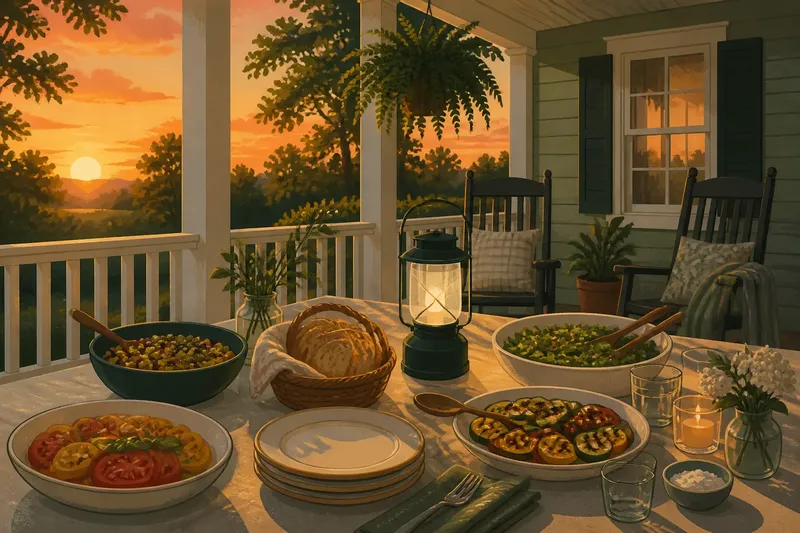
A late-summer porch supper is easier to enjoy when the menu and serving plan follow the evening light. Set the table while you can see clearly, choose dishes that can wait safely, and aim to eat before fading light makes passing plates awkward.
Reading evening light
Notice when the sun leaves the table and when the porch begins to feel dim. A west-facing space may hold the glare late into the evening; a deep roof or nearby trees can bring darkness sooner than you expect. Check the porch around the time you are considering for supper, then choose whether guests should arrive for a drink before the meal or just ahead of serving.
Sunset is a useful landmark, not a dinner bell. The sky may remain bright after the sun drops, while the table under a roof can already be shadowed. Put out plates, serving dishes and utensils before dusk, and have a steady lamp or battery lantern ready. Candles can add a little glow, but they are poor task lighting and should sit well away from sleeves, paper and loose cloth.
Say you expect the porch table to become dim before the sky does. You set out the plates and serving spoons while the light is clear, then place a battery lantern at the table’s edge before guests arrive. The visible result is that people can identify dishes and pass them comfortably as the evening darkens, without you stopping supper to rearrange the table.
Do the fiddly jobs while the light is good; save conversation for dusk.
A menu that waits
Choose food that does not need several last-minute trips to the kitchen. Sliced tomatoes, corn, beans, grilled vegetables, a cold salad, sandwiches and ripe peaches can suit a late-summer table. Build around a filling dish, add a vegetable or salad, and keep a small nibble ready for guests who arrive before supper.
Prepare serving pieces in advance and decide which dishes need chilling or careful holding. Follow the food’s storage directions and local food-safety guidance, especially for perishable ingredients. If a warm dish is part of the meal, finish it before guests arrive and give it a stable place away from the table’s edge.
Imagine you have ripe tomatoes, a loaf of bread and a pot of beans ready before the afternoon heat. You chill or hold the beans as appropriate, dress the tomatoes shortly before serving, and set out the bread when guests arrive. The result is a meal with satisfying variety, while you are free to sit down instead of juggling pans.
Keep the menu short enough that you can eat it with everyone else.
Serving before dark
Arrange the table while labels, colours and serving utensils are easy to see. Put a spoon or tongs beside each dish, leave room for glasses, and keep extra plates and napkins indoors rather than crowding the table. A small note can help you remember which bowl holds a particular salad if several dishes look alike.
Think through the meal’s sequence: what can be set out first, what should stay chilled, and what needs to come straight from the kitchen. Avoid carving or sorting sauces at the table once it is dim. If you use a cooler or insulated carrier, place it where it does not block the doorway or the path to the serving area.
A simple indoor arrangement is useful if the weather turns or the porch becomes uncomfortable. Decide in advance which dishes can move, where people can sit and how you will protect food from rain. Keep electrical equipment away from wet areas, and never use outdoor cooking equipment in an enclosed or poorly ventilated space.
Late-summer supper questions?
Should supper start before sunset?
Serve when the porch is comfortable and the food is ready, rather than following sunset as a strict deadline. If the table grows dim early, eat sooner or arrange suitable lighting before guests arrive.
What if the porch stays hot?
Wait for shade to reach the table, or move the meal indoors if the space remains uncomfortable. You can still use the porch for a short visit when conditions feel pleasant.
How much food should I prepare?
Choose a modest menu suited to the invited group and the length of the evening. Ask about dietary needs when you invite people, then plan clear alternatives so guests do not have to guess what is suitable for them.
What if rain is forecast?
Decide ahead of time whether the meal will move inside, and identify which dishes need covering or chilling during the change. Tell guests the plan plainly so a shift indoors feels like part of the evening rather than a last-minute scramble.
Weather and timing
Late-summer conditions can shift, so make the meal adaptable instead of tying it to a perfect sunset. If a shower begins, move food under cover and bring people indoors when the porch is no longer comfortable. A simple invitation can set expectations: “We’ll eat outside if the evening stays clear, and move in if it turns.”
For a late-summer porch supper, the light is most useful as a cue for preparation and serving, not as a reason to rush. Put out the dishes early, keep an indoor plan ready and let the meal begin while everyone can still see what is on the table.