Cast-Iron Skillet or Sheet Pan for a Weeknight Supper?
Cast-iron skillet or sheet pan: choose the right pan for your weeknight supper, with better browning, sensible portions, easy serving and simpler cleanup.
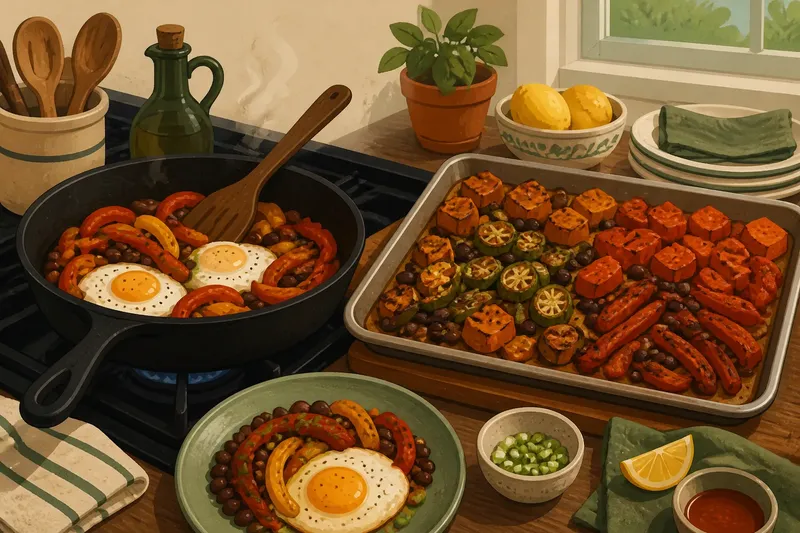
A cast-iron skillet or sheet pan can change how a weeknight supper cooks and lands on the table. Choose a skillet for a smaller meal that needs stirring or a contained sauce; choose a sheet pan when ingredients need room to roast. The amount you are cooking, the browning you want and the washing-up ahead all help settle the choice.
A crowded pan can leave vegetables soft, while a stack of dishes can make a simple meal feel like a chore. Think through the finished supper before you reach for cookware: will its ingredients mingle, or should they roast separately?
Cast-iron skillet or sheet pan plans
For a modest meal, a skillet keeps ingredients together while you turn or stir them with a spatula. It suits sliced vegetables, eggs, cornbread or a small amount of meat, especially when you want to watch the food closely.
A sheet pan gives a larger batch room to spread out. When okra, squash or sweet potato sit in a loose layer, moisture can escape more readily and their edges can brown. It also lets several ingredients roast together without constant stirring.
Pan capacity depends on the food as well as the cookware. Moist vegetables such as tomatoes and courgettes release liquid as they cook. In a crowded skillet, they may soften in that liquid; spread across a sheet pan, they have more surface area exposed to the oven’s heat.
Say you have sliced peppers, a tin of drained beans and a couple of eggs for supper for two. Start the peppers in a skillet, stir in the beans to warm them, then make spaces for the eggs to cook. The expected result is a compact, spoonable meal with the eggs easy to serve from the pan. If instead you are roasting a larger tray of peppers and beans for several people, a sheet pan gives them room and makes it easy to portion them afterwards.
Browning and batch size
Browned food needs contact with a hot surface and enough open space for steam to escape. Cast iron holds heat well once warmed, which can suit sliced potatoes or fish that benefit from a sear. If the food would cover the skillet in a crowded layer, cook it in batches.
A sheet pan suits ingredients that can roast undisturbed. Cut vegetables into similar-sized pieces so they cook at a similar pace, and leave space between them. If they are packed tightly, they are more likely to soften before their edges colour.
Consider how much attention you can give the hob. A skillet may need turning or stirring, particularly when ingredients brown quickly. A sheet pan asks for more preparation—washing, cutting and arranging—but once it is in the oven, you can set the table or put the kettle on.
Check the cookware maker’s directions before using a pan in the oven; handles, coatings and construction differ. Follow your recipe and ingredient instructions for cooking times.
Serving at the table
A skillet suits food meant to stay together: a scramble, cornbread or vegetables folded into warm beans. Its sides contain a saucy mixture, and it can travel from hob to table. Set it on a heatproof trivet, and warn everyone that the handle may remain hot.
A sheet pan is handy when diners can choose their own combination. Roasted chicken, onions and vegetables can stay in separate patches, making it simple to serve different portions without mixing the supper. Chopped spring onions, lemon or pepper sauce can go on at the table.
Think about where the pan will land before cooking. A broad sheet pan needs a stable, heatproof surface and may be awkward on a small table. A skillet takes up less room, but its handle can extend beyond the trivet. Moving food to a serving bowl solves either problem, though it adds a dish to wash.
Cleanup after supper
A sheet pan can be straightforward to clean when food has not baked onto the surface. Parchment may ease cleanup for many roasting jobs, but check that it suits the oven temperature and recipe. A bare pan gives food direct contact with the surface, though it may need more soaking and scrubbing.
Cast iron has its own care routine. Let the pan cool enough to handle safely, then clean it according to its care instructions and dry it thoroughly before storing. Warm water and a brush or scraper intended for the pan can loosen stubborn bits. Do not leave it wet in the sink, where lingering moisture can encourage rust.
The food matters as much as the pan. A dry roasted meal may leave little residue, while sticky sauce can cling to a sheet pan. Eggs or seared vegetables may wipe from a skillet readily; a sugary glaze or scorched food may take more effort. Consider the likely washing-up alongside the cooking.
Which pan suits your supper?
Which pan is better for vegetables?
Use a sheet pan when you have enough vegetables to spread in a loose layer and want roasted edges. Choose a skillet for a smaller portion you plan to stir, soften or combine with other ingredients.
Can a sheet pan replace a skillet?
It can handle many oven-roasted meals, but it is less convenient for food that needs frequent stirring or a contained sauce. A skillet is generally handier for those tasks on the hob.
Which pan is easier to serve from?
A skillet suits cohesive dishes that can be spooned or cut from one pan. A sheet pan works well when ingredients stay separate and diners can choose what goes on their plate.
What if the pan seems crowded?
Cook in batches or divide the food between pans rather than piling it high. If several ingredients need to cook together, choose a surface that gives them room and suits their different cooking times.
A simple weeknight rhythm
Notice which meals suit the equipment you already use. Save the skillet for compact suppers that benefit from stirring or a quick sear; use the sheet pan for several components or a larger batch. The same chicken and vegetables can suit either pan, depending on how much you are making and how you want to serve them.
Before cooking, consider the finished plate. If the ingredients should mingle, choose a skillet; if they should roast separately with room around them, choose a sheet pan. For a weeknight supper, that simple distinction helps you choose the right pan for browning, serving and cleanup.